
Review: Summer Snow by Robert Hass

Summer Snow
by Robert Hass

8 Highlighters out of 10

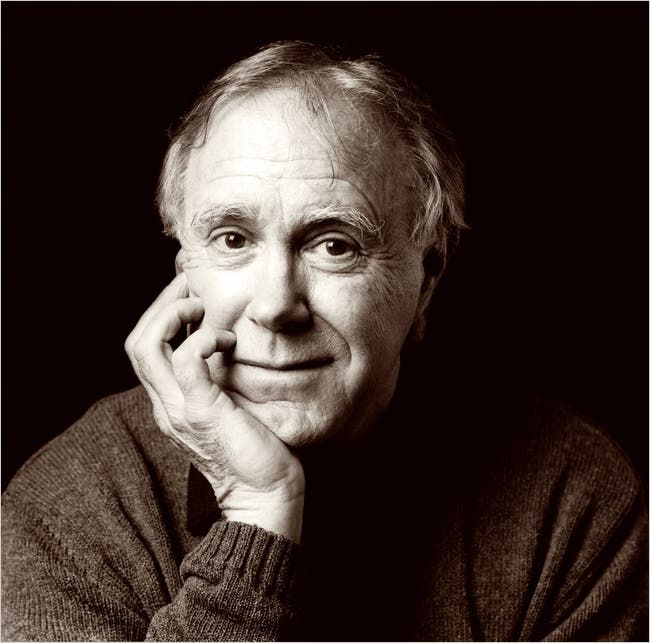
Robert Hass was born in San Francisco, California. He served as the U.S. Poet Laureate from 1995-1997 and now teaches at UC, Berkeley. He has been publishing poetry for over 40 years now and Summer Snow is his newest collection of all new poems published this year, 2020.
For me this new collection felt like a slow start but part of that may have been my own state of mind. Maybe it was fitting that I didn’t really get engrossed in the poems until summer had begun and my life had slowed down enough for me to sit peacefully and read attentively. If you have read any of his other work, you will find similar styles and themes in this new batch: nature, spirituality, activism, and precise language.
Robert Hass’ poetry is powerful while also making the creation of poetry feel achievable—like something we all can, and should, do. I forget who once defined poetry as “language that exists for the sole purpose of existing”. It’s not selling you a product, completing a business transaction, or even giving directions for how to accomplish some mundane task or chore. It can be directions for living a good life though. Hass’ style reads so much like it was lifted straight from the pages of his personal notebook. That’s what makes it feel motivating, and poetry achievable. At the same time, the information across the lines is clearly well researched and there is undeniably a sense of form that is artfully crafted. So that appearance of natural, immediate thought is actually part of the design. It’s a ridiculous miracle of writing that Hass so often reaches.
Hass has a certain spirituality that I am drawn to. Desire is a concept felt and investigated across many of his poems, not just in this book. To me, he does the work of offering insights and reminders for how to practice a U.S.-Buddhism. Meditation—following a noble path in life—is a practice. Lines like this. . .
purification: the desire
for the cessation of desire
is a desire.
. . . remind me to pause, breathe, and reconsider what it means to be a good practitioner. These lines can be found on page 91, “February Notebook: The Rains”, “A Memory”.
In times that test our hope, meditation is an important practice that it is far too easy to lose sight of. “After Xue Di” tells us “There are ways of not quitting / morally.” Immediately after, “Dancing” opens “the radio clicks on—it’s poor swollen America / Up already and busy selling the exhausting obligation / Of happiness”.
Hass is also concerned with translation. Two translations from Anglo-Saxon are in Summer Snow. And the feeling associated with the inherent issue of translation is explored in “Large Bouquet of Summer Flowers, or Allegory of the Imagination”:
. . . we are haunted
Or even constituted by the teasing awareness
Of the presence in ourselves of an unreachable
And twinned other which creates the small shock
We feel when we sense the dissimilarity in metaphors
And the way that a translation doesn’t feel like a twin.
Hass’ attempts toward a “boundless poetics” will delight those who find pleasure and fascination in language as a uniquely human tool. His perspectives on both language and spirituality are a delight to me, whose early interests in literature and Buddhism can be traced back to a teenage reading of an English translation of Siddhartha from Herman Hesse’s German.
If you’re interested but unsure about how to dive into understanding and appreciating Hass’ particular approach to poetry, start from what might be the climax of Summer Snow read as a whole: “Seoul Notebook” (pages 137-144, about 80% through the book).
This is one of his poems that reads a lot like prose, a short non-fiction narrative in two parts. The first part is “1. First Day of the Conference on Peace”. Hass describes his visit to the Institute of Korean Studies with gorgeous imagery and thought-provoking quotes from those attending the conference, lifted from his notebook. Of course, no consensus on how to reach world peace was achieved (otherwise I’m sure you would have heard about this book already). But, the act of reading what Hass has described can bring each of us, individually, closer and closer incrementally. This poem gives the reader plenty to think about, including even the existence, purpose, implications of such a conference attended overwhelmingly by the “mostly male, mostly middle-aged” served food and drink by young women working the event.
The second part is “2. Mouths of Babes”. One woman attending the event is the wife of a Korean professor of the philosophy of science. She’s from Kansas so Hass can talk to her casually in English as well as her daughter, Holly. When saying their goodbyes after the event Holly says “We’ve got to think our way to world peace.”
There’s more depth to this when you read the whole “Seoul Notebook” poem, which I am urging you to do here. I hope it motivates you to read more from this wondrous new collection. There’s plenty to think about.



Comments